How to Wear Capris When Mornings Turn Cool but Afternoons Do Not
Quick Answer: Capris work through the cool-morning-warm-afternoon stretch when you close the ankle gap and add a removable top layer - a crew or ankle sock with a closed shoe handles the morning chill, and the calf exposure keeps you comfortable in the afternoon. The mistake is treating it as a fabric problem; it’s an ankle and layering problem, and it stays solvable until overnight lows sit consistently below the mid-50s.
Eighteen degrees of swing between when you leave and when you come back. The full-length leggings are too much by noon and the capris feel wrong at 8am.
Capris are actually the better choice for this exact window. You just have to style them for it.

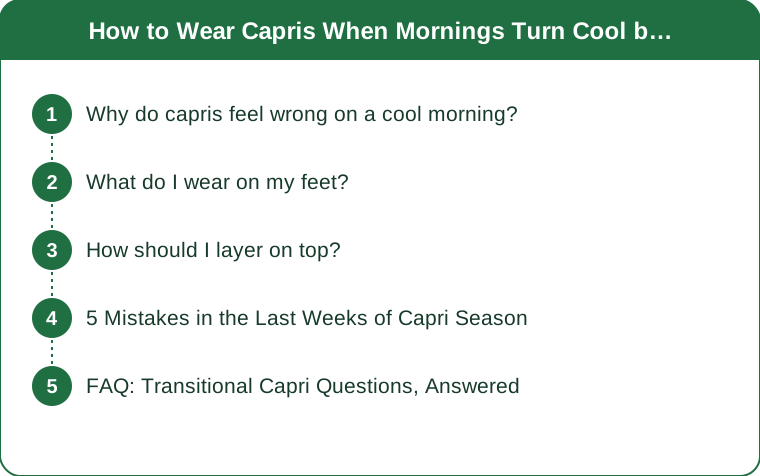
Why do capris feel wrong on a cool morning?
It’s almost entirely about where the cold lands, not how much skin is showing.
The exposed area is the lower calf and ankle, and that’s a region with relatively little insulating tissue and prominent surface blood vessels. Cooling it produces a disproportionate sensation of being cold overall - the same reason cold hands make your whole body feel cold.
Wind makes it worse than the temperature suggests. A bare ankle in a 12mph breeze at 58F feels dramatically colder than the same ankle in still air. Standing at a bus stop or in a car park is the part of the morning where capris actually feel wrong, not the walking.
The good news: that means the fix is local. Warm the ankle and the perception of cold across the whole outfit changes, without adding a layer you’ll be carrying by lunchtime.
The proof is a familiar experience: cropped trousers with a proper sock and closed shoe feel fine in autumn, and the same trousers with a no-show sock and a low-cut shoe feel cold. Identical leg coverage; completely different outcome.
What this means practically: the last three or four weeks of capri season are extended significantly by two things you probably already own - socks and closed shoes.
What do I wear on my feet?
This is the whole game for transitional capris.
The reliable combinations, from most to least warm:
1. Ankle boot with a crew sock. The strongest option. A capri that ends mid-calf with a boot ending just above the ankle leaves a short section of leg visible, which reads deliberate and stays warm. Works with leggings-style capris and cropped trousers equally.
2. Trainers with a visible crew sock. Casual, current, and genuinely warm. The visible sock is a styling choice now rather than a compromise, which makes this easier than it was a few years ago.
3. Loafer or flat with an ankle sock. More polished. Slightly less warm than a crew sock and enough for most mornings above 55F.
4. Slip-on or mule with a no-show sock. Summer’s version. This is the combination that stops working first, and it’s usually the one people keep defaulting to before concluding capris are done for the year.
The proportion rule: the gap between the hem of the capri and the top of the shoe should be short and intentional. A large expanse of bare calf between a mid-calf hem and a low shoe is what reads as seasonally off - not the capri itself.
Colour matters here too. Matching the sock roughly to the shoe elongates the leg; matching it to the capri shortens it visually. Either can work, and the accidental third option - sock contrasting with both - is the one that looks unconsidered.

How should I layer on top?
One removable mid-layer, chosen for how easily it packs away.
The three-part transitional formula:
- Base - a fitted tee or long-sleeve top
- Mid - a light knit, overshirt, or zip-up. This is the layer that comes off at 11am
- Optional shell - only if wind or rain is a factor
The mid-layer criterion nobody mentions: how does it look tied around your waist or stuffed in a bag? You’ll be carrying it for six hours. A slouchy overshirt or a thin knit handles this well; a structured jacket doesn’t, and a bulky one ends up left behind somewhere.
Longer tops work harder in this weather. A top that covers the hip eliminates the cold small-of-the-back patch and balances proportions against a cropped hem. With capris specifically, a longer top plus a short jacket is a better silhouette than a short top plus a long coat.
Sleeve length is the underused variable. A three-quarter sleeve handles the transition better than either short or long - warm enough at 8am, not too much at 2pm - and it visually rhymes with a cropped trouser, which is why the combination looks coherent.
One accessory that outperforms its size: a light scarf. The neck is the second-highest-leverage area after the ankles, it weighs nothing, and it stuffs into any bag once the day warms up.
5 Mistakes in the Last Weeks of Capri Season
The recurring ones.
1. No-show socks with a low shoe on a 55F morning. The single most common. It’s the ankle, not the calf, doing the damage - and it’s the easiest thing to fix.
2. Switching to full-length leggings for the whole day. Solves the morning, ruins the afternoon. You’ll be uncomfortably warm from 11am onward, and there’s no way to remove trousers at work.
3. Wearing a heavy coat over a cropped hem. The proportions fight each other and you end up carrying the coat. A shorter jacket or an unstructured overshirt sits far better with a cropped trouser.
4. Bare ankles with a summer sandal in September. Not a warmth issue so much as a seasonal-read issue. The shoe dates the outfit faster than the trouser length does - a capri with a boot reads autumn, a capri with a slide reads July.
5. Assuming capri season ends on a date. It ends when overnight lows sit consistently in the low 50s and morning wind picks up. In many US regions that’s late September or into October, which is a good three or four weeks longer than most people assume.
The overall principle: capris aren’t a summer garment that expires. They’re a transitional garment being used as a summer one for a few months of the year.
FAQ: Transitional Capri Questions, Answered
When should I actually stop wearing capris?
When the morning temperature you’ll be standing around in sits below the low 50s, or when wind makes exposed ankles genuinely uncomfortable. For most US regions that’s late September into October - and even then they work indoors and under a longer coat.
Do capris look dated?
Cropped lengths cycle, and the specific length matters more than the category. A mid-calf capri legging with a boot looks current; a below-the-knee, loose-cut cotton capri with a low shoe is the version that reads dated. Length and shoe pairing do the work.
What length works best for the transition?
A hem that ends at or just below the widest part of the calf, paired with footwear that comes up to or above the ankle. That combination leaves a short intentional gap rather than a large expanse of bare leg.
Can I wear capris to the office in autumn?
In a tailored fabric with a loafer, a proper sock and a blazer, yes in many workplaces. Capri leggings are a different question and depend entirely on the dress code.
Are cropped trousers and capris the same thing?
Broadly the same idea with different cuts - capris typically end mid-calf and fit closer, cropped trousers end anywhere from below the knee to just above the ankle and are often wider. The ankle and shoe rules apply identically to both.
TL;DR:
- Cool-morning discomfort in capris is about the ankle, not the calf - close that gap and the whole outfit feels warmer
- Best pairings: ankle boot with a crew sock, or trainers with a visible crew sock
- Keep the gap between hem and shoe short and intentional; a large bare stretch is what reads off-season
- One removable mid-layer, chosen for how it packs away, since you’ll carry it for hours
- Three-quarter sleeves and a hip-length top pair better with a cropped hem than short-plus-long
- Capri season ends when overnight lows sit in the low 50s - usually weeks later than people assume
The capris aren’t the problem. The no-show socks are.
See It in Motion
Seen here: Super High Waist Embossed Yoga Leggings with Inner Pocket — shop it on bubblelime.com
Keep Reading
This article is for general informational and styling purposes only. Fit, sizing, and product availability may vary.