Capris When the Morning Is Cold but the Gym Is Still Hot
Quick Answer: Cover the gap rather than changing the legging. A long sock or a leg warmer that meets the capri hem, plus a layer you remove at the door, solves the whole problem — the calf is the only exposed area and it is the cheapest thing to cover. Indoor gyms typically stay warm well into autumn, so the legging should be chosen for the workout, not for the walk.
Outside it is nine degrees. Inside the studio it is twenty-four and will be twenty-eight by the third round.
One pair of leggings has to handle both, and full length is going to be a mistake by minute ten.
Why does the gym stay hot when the weather turns?
Because indoor temperature is set for people who are moving, and because heating comes on before the building actually needs it.
A gym or studio is typically held somewhere in the low twenties, which is comfortable for a person standing still in normal clothes and warm for a person doing intervals. Add bodies — a full class produces a substantial amount of heat — and add the heating system switching on for the season, and studios in October are frequently warmer than they were in August, when doors were open and air conditioning was running.
Three specific things change in autumn:
Ventilation drops. Doors and windows that were open all summer are closed. Airflow falls and humidity rises, which makes the same temperature feel warmer and makes sweat evaporate more slowly.
Heating comes on early. Most buildings switch over on a date rather than a temperature, and the changeover period is often overheated.
You arrive already warm from walking in a jacket, which means you start the session from a higher baseline than you did in summer.
The implication is straightforward: the reason to wear full length in autumn is the journey, not the workout. So solve the journey.
What actually covers the gap?
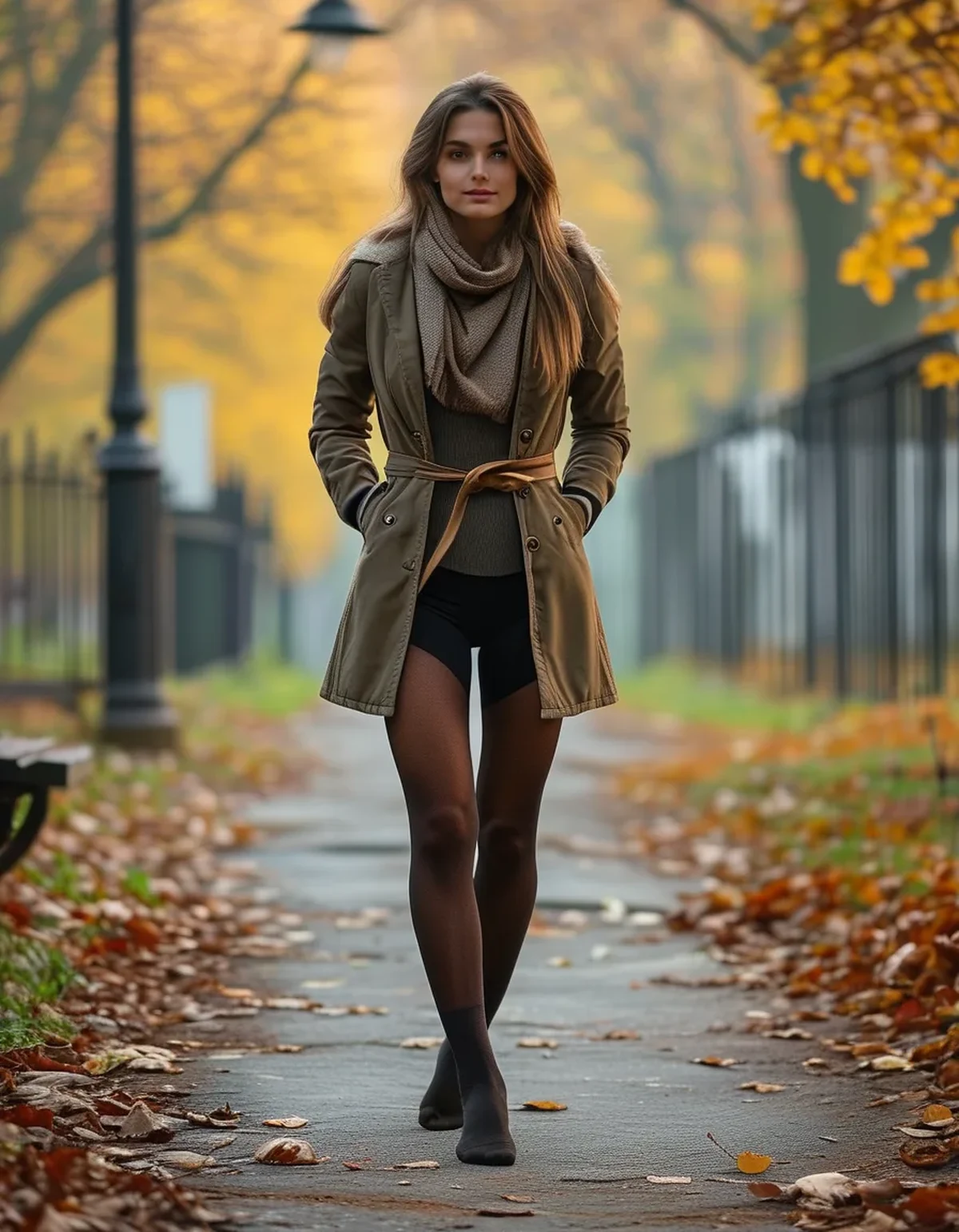
A long sock, a leg warmer, or a crew sock with a longer cuff, meeting the capri hem.
This sounds obviously right and almost nobody does it, largely because of a lingering sense that visible socks with cropped leggings look wrong. They no longer do — the crew sock has been standard with activewear for several seasons and it reads as deliberate.
What works, roughly by coverage:
- A crew sock — covers the ankle and a few inches of calf. Enough for a mild morning.
- A longer athletic sock — mid-calf, meets most capri hems.
- A leg warmer — full coverage from hem to ankle, removable in seconds, and genuinely the most practical option. They roll down or come off entirely at the door.
- A knee-high sock — covers the whole gap and works well under a longer legging length too.
The one rule: the sock should meet or overlap the hem, not leave a strip of bare skin between. A gap of exposed skin is both colder and visually the thing that reads as unintentional. Overlap by an inch or two.
Colour: matching the sock to the legging makes the leg read as one continuous line and is the most flattering option. A contrasting sock is a deliberate style choice and works, but it visibly shortens the leg.

What should the top half do?
Everything the legs are not doing — which means the outer layer needs to be genuinely warm and genuinely easy to remove.
The structure that works:
- Your actual workout top, as the base. Whatever you would wear in the studio.
- A warm, full-zip mid or outer layer for the journey. Full zip matters — you can open it progressively as you warm up on the walk, and get it off without disturbing a hairstyle.
- A hat and gloves, if it is genuinely cold. Extremities are where you lose heat fastest, and covering them lets you get away with far less on the legs. A hat weighs nothing and fits in a pocket.
Why the top half carries the load: the torso is where most of your heat is, and covering it well allows the legs to be under-dressed comfortably. This is the same principle that lets runners wear shorts in December — a warm core makes cool legs tolerable.
What not to do: wear the warm layer as your workout top and plan to take it off, revealing a bra top you were not planning to train in. That is how people end up doing a whole class in a jacket, overheating.
One practical detail: whatever comes off at the door needs somewhere to go. A jacket that packs small, or a bag you were bringing anyway. A bulky coat you have to carry is what makes people over-dress for the walk instead.
5 Mistakes Everyone Makes in the Transitional Weeks
1. Dressing for the walk instead of the workout. The walk is fifteen minutes; the workout is forty-five. You will spend three times as long in the studio as outside, and being too hot in a class is far worse than being briefly cool on the way there.
2. Bare ankles. The single coldest part of this outfit is the strip between the hem and the shoe, and it is also the cheapest to fix. A sock costs nothing and changes the whole experience.
3. Switching to full length too early. Most people move to full-length leggings the first cold week and then spend six weeks overheating indoors. The indoor temperature does not track the outdoor one. Capris are usually good indoors well past the point where they feel wrong outdoors.
4. Wearing a base layer under the capri. It seems logical and it creates a bunched, uncomfortable layer that you cannot remove without changing completely. This is the mistake that most reliably ruins a session, because there is no way to fix it mid-class.
5. Ignoring the walk home. You leave warm and sweaty into cold air, which is when you actually get cold. The dry layer for afterwards matters more than the layer on the way there — a damp base layer in nine-degree air is genuinely unpleasant, and a spare top in your bag solves it.
FAQ: Transitional Capri Questions, Answered
How cold does it have to be before capris stop making sense?
For an indoor workout with a short journey, capris work down to surprisingly low temperatures if you cover the gap and dress the top half properly — many people wear them all winter. For anything outdoors, or a journey longer than about twenty minutes, full length becomes the sensible choice around the point where you would want gloves.
Do capris look wrong with closed shoes?
They look wrong with a gap, which is what people are actually reacting to. With a sock that meets the hem, closed shoes and capris look entirely normal. It is the bare strip of ankle in October that reads as out of season.
What about 7/8 length instead?
A 7/8 is the easiest transitional length — it sits just above the ankle bone, so the gap is small and easily covered by any sock. If you are buying now rather than working with what you own, 7/8 is the most useful length for exactly this period.
Should I store my capris for winter?
Not yet. Indoor training keeps them useful for months, and putting them away in October usually means buying full length you did not need. Store them clean and dry, folded rather than hung, whenever you do put them away — hanging stretches the waistband over time.
TL;DR:
- The gym stays warm long after the weather turns. Ventilation drops, heating comes on early, and bodies produce heat.
- Cover the gap, not the leg. A long sock or leg warmer that meets or overlaps the hem — no bare strip.
- Match the sock to the legging for one continuous line.
- Put the warmth in the top half: a full-zip outer layer, plus a hat and gloves. A warm core makes cool legs comfortable.
- Dress for the workout, not the walk. You will be in the studio three times as long.
- Never wear a base layer under a capri — you cannot remove it mid-class.
- Pack a dry top for the walk home. That is when you actually get cold.
See It in Motion
Seen here: Racerback Tank Top - White — shop similar styles on bubblelime.com
Keep Reading
This article is for general informational and styling purposes only. Fit, sizing, and product availability may vary.