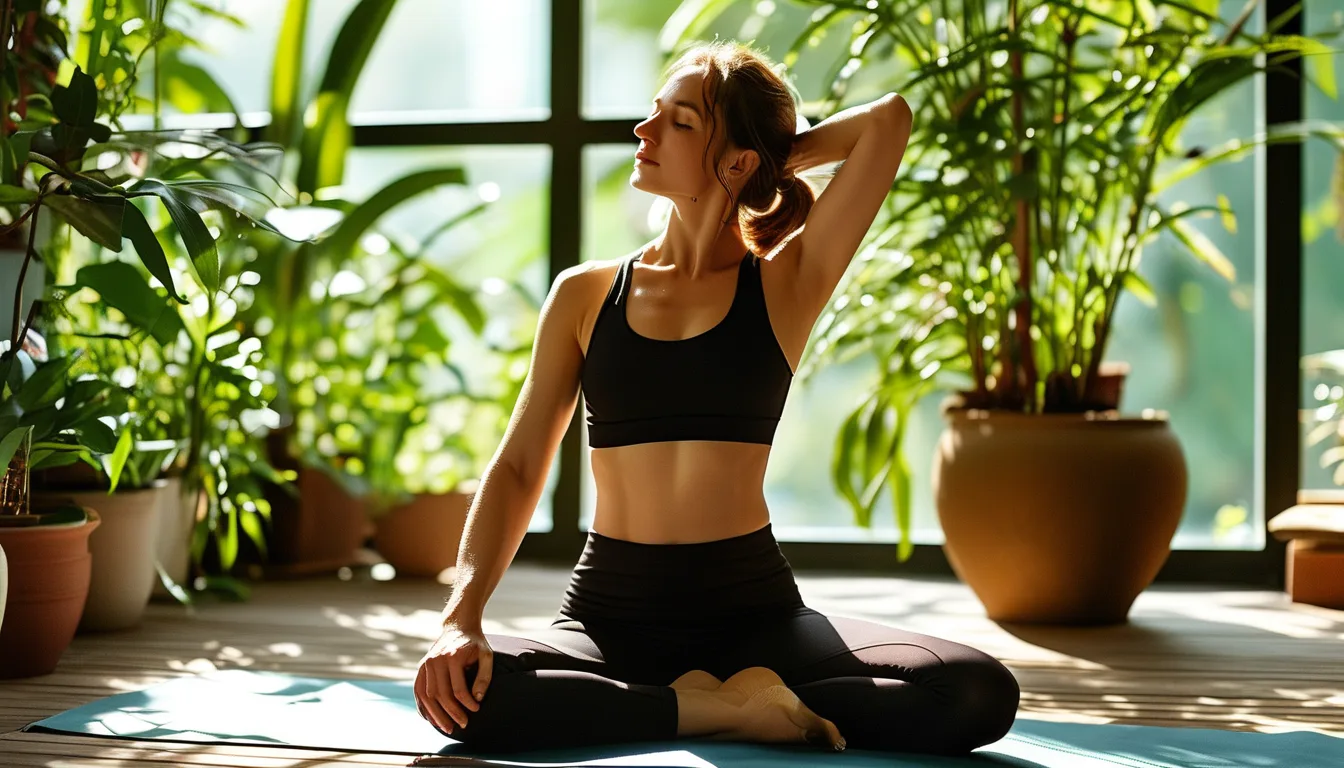
Why Capri Leggings Look Shorter in Photos Than in the Mirror
Quick Answer: Capri leggings look shorter in photos because a camera lens flattens depth and compresses the vertical, while a mirror shows you a life-sized reflection viewed from your own eye level. Phone cameras add a second effect - shot from chest height or below, the wide-angle lens exaggerates whatever is closest to it and foreshortens the lower leg. The mirror is closer to how other people see you. If you want photos to match, shoot from the subject’s eye level at a slight distance and use the 2x lens rather than the wide one.
You looked in the mirror. The capris hit exactly where you wanted, mid-calf, clean. You felt good about the whole outfit.
Then someone took a photo and the same leggings appear to end somewhere near your knee, your legs look shorter, and the proportion you carefully checked has vanished.
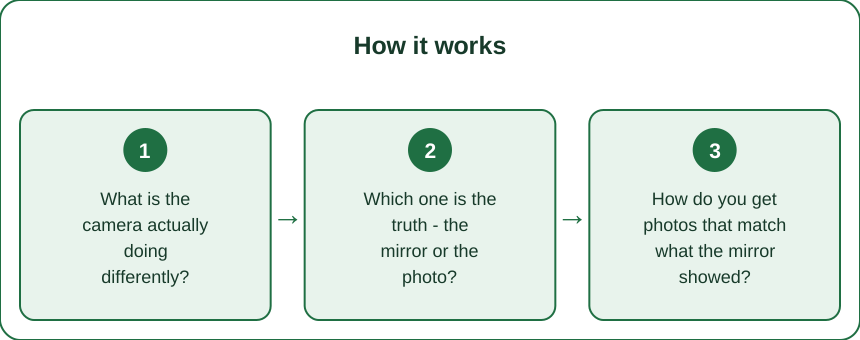
What is the camera actually doing differently?
Three separate distortions, and they stack.
Lens compression and wide-angle distortion. A phone’s main camera is a fairly wide lens. Wide lenses exaggerate the relative size of whatever is nearest the camera and shrink what is further away. If the photo is taken from chest height, your torso is closest, your lower legs are furthest, and your calves are rendered proportionally smaller. The capri hem, sitting on a foreshortened lower leg, appears to cut higher than it does.
Camera height. This is the biggest single factor and the easiest to fix. Most photos of us are taken by someone holding a phone at their chest, which means the lens is above the midpoint of your body and angled slightly down. Anything below the lens gets compressed. Shot from waist height, the same outfit gains apparent leg length; shot from above, it loses it.
Two dimensions instead of three. A mirror gives you a life-size reflection with genuine depth cues, viewed from your own eye level. A photo has flattened everything into a plane. Your brain reads the flattened version differently, and it reads proportions as more compressed.
And a fourth, subtler one: in a mirror you look at yourself in a specific order - usually face first, then down the body. In a photo you take in the whole rectangle at once, which is much closer to how a stranger sees you, and small proportion issues that the mirror sequence glosses over become visible.
Which one is the truth - the mirror or the photo?
The mirror is closer, with one important caveat.
A person looking at you is a three-dimensional viewer at roughly your own eye level standing several feet away. That is very close to the mirror’s rendering and quite far from a phone photo shot from chest height at arm’s length.
So when you check an outfit in a mirror and like it, that judgement is broadly valid for how you will look walking around.
The caveat: the mirror is a poor guide to how you will look in photos, and if photos matter to you - for an event, for anything you will post - then the photo version is the one that counts for that purpose. They are two different outputs and there is no reason a single outfit has to win both.
There is also a mirror-specific distortion worth knowing. Full-length mirrors are frequently mounted with a slight backward tilt, which lengthens the reflection. Cheap mirrors can have genuine optical waviness. If your mirror consistently flatters more than any photo ever does, check whether it is truly vertical - a spirit level app takes ten seconds and it explains a surprising number of discrepancies.
The most reliable test: get someone to photograph you from their eye level, standing about three metres back, using the 2x zoom. That combination removes nearly all of the distortion and is the closest thing to how you actually appear to another person.
How do you get photos that match what the mirror showed?
Five adjustments, in order of how much difference they make.
1. Lower the camera to hip or waist height. The single biggest change. Shooting from below the midpoint lengthens the legs and restores the hem position you saw. If you are using a tripod or propping the phone, put it on a chair rather than a table.
2. Use the 2x lens rather than the main wide one. A longer focal length compresses less dramatically and renders proportions much closer to reality. Nearly every modern phone has one, and almost nobody uses it for full-body shots.
3. Step back and zoom in rather than moving closer. Distance is what kills wide-angle distortion. Three metres back at 2x beats one metre back at 1x every time.
4. Turn slightly and stagger your feet. A square-on stance from a flattening lens is the least flattering possible combination. A slight turn plus one foot forward reintroduces the depth the lens removed.
5. Check the horizon line. If the photo is tilted or shot at an angle, everything below the centre gets distorted unpredictably. Grid lines on the camera app solve this.
And one styling adjustment that works regardless of the camera: what makes a capri hem read well is what is below it. An unbroken colour line from hem to shoe - matching socks, or bare ankle with a low-profile trainer - reads longer than a hard contrast at the ankle. In photos, where the leg is already being foreshortened, that contrast break is much more punishing than it is in the mirror.
What Nobody Tells You About Capri Length and Proportion
The hem position that suits you is not a fixed measurement - it is a ratio, and it moves with your shoes.
The same capri leggings with flat trainers, with a slight-platform trainer, and with a low boot all sit at a visually different point relative to your leg, because the shoe changes where the leg appears to end. This is why a pair that looked perfect all summer with your usual trainers looks wrong the week you switch to something with more sole.
The narrowest part of the calf is the target. Any hem that ends at the widest point of your calf will read as cutting the leg, whatever the length. The flattering positions are just above the calf’s widest point or just below it. This is a personal measurement, not a size chart entry, and it is why two people in the same size get very different results from the same garment.
Photos exaggerate whatever the mirror only hinted at. If the hem is marginally in the wrong place, the mirror will tell you it is fine and the camera will tell you it is not - not because the camera is being harsh, but because the compression amplifies the error. A hem that photographs well will always look good in person; the reverse is not true.
And a seasonal note that catches everyone in late summer. As you switch from bare ankles and low trainers to socks and closed shoes, every capri in your drawer changes its apparent proportion in the same week. Nothing is wrong with the leggings. The reference point at the bottom of the leg moved, and the hem you had settled on is now measuring against something different.
FAQ: Capri Length and Photo Questions, Answered
Why do I look completely different in changing room mirrors?
Retail lighting is usually warm, high, and directional, which sculpts the body more than flat home lighting. Some changing room mirrors are also deliberately tilted. Neither is exactly a lie, but the shop mirror is a poor predictor of your bedroom mirror.
Do capris suit shorter legs at all?
Yes, with attention to where the hem falls and what is below it. Aim just below the widest part of the calf, keep the leg line unbroken to the shoe, and avoid a hard colour contrast at the ankle. A 7/8 length is often an easier win than a true mid-calf capri.
Should I just buy full-length instead?
Only if you prefer them. Full-length is easier to get right, but capris solve a real problem in transitional weather when full-length is too warm and shorts are too cool. The fix for a difficult capri is usually the shoe, not the trouser.
Why do capris look better on some days than others?
Mostly the shoes, occasionally fluid retention shifting calf circumference slightly, and often just the light. If it is a genuine consistent problem with one pair, check the hem against your calf’s widest point - that is usually the culprit.
TL;DR:
- Photos shorten capris because of wide-angle distortion, camera height, and the loss of depth - three effects that stack.
- The mirror is closer to how people actually see you. The photo is closer to how you will look in photos. Both are valid for different purposes.
- Lower the camera to hip height and use the 2x lens. Those two changes fix most of the discrepancy.
- Step back and zoom rather than moving closer - distance is what removes lens distortion.
- The right hem is just above or just below the widest part of your calf, never at it.
- Shoes move the reference point. The pair that worked all summer will read differently the week you switch to closed shoes.
If a photo made you doubt an outfit you liked in the mirror, check who took it and from what height before you doubt the leggings. Most of the time the outfit was fine and the lens was at chest level.
See It in Motion
Seen here: High Waist Embossed Yoga Leggings with Side Pockets — shop it on bubblelime.com
Keep Reading
This article is for general informational and styling purposes only. Fit, sizing, and product availability may vary.