What to Do With Your Capris When Capri Season Actually Ends
Quick Answer: Wash everything before storing, since body oils and sweat residue degrade elastane over months even in a clean-looking garment. Fold rather than hang - hanging stretches the waistband over time. Store somewhere cool, dark, and dry, since heat and light both break down elastic fibres. Before you store anything, run a quick audit: pairs that have lost recovery, gone sheer, or pilled between the thighs should be retired now rather than taking up space and disappointing you in April. And keep two pairs out, because capris earn a second life as a layering base under trousers in cold weather.
The last genuinely warm week is a good moment for this. It takes twenty minutes and it is the difference between opening the box next spring to a usable set or a bag of tired elastic.

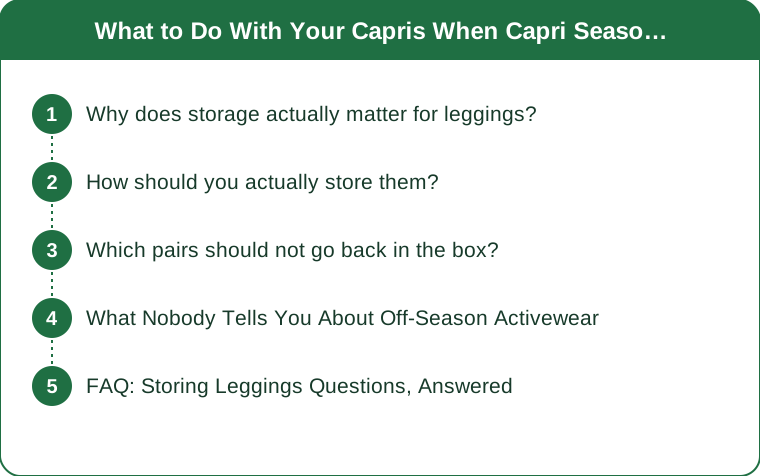
Why does storage actually matter for leggings?
Elastane degrades over time, and it degrades faster under specific conditions - most of which are present in an average storage situation.
The three things that break it down:
- Residual body oils and sweat. These are the big one. Even a pair that looks and smells clean carries oils that continue to break down elastic fibres over months of storage. A pair put away unwashed will have measurably less recovery when it comes out.
- Heat. Elastane relaxes and loses recovery with heat exposure. A loft, a garage, or a drawer above a radiator is a genuinely bad place to store activewear for six months.
- Light. UV degrades both elastane and dye. Clear storage boxes near a window are worse than they look.
And one that damages differently:
Hanging. Gravity acting on a heavy stretch garment for months stretches the waistband and the upper leg. Leggings should be folded or rolled, never hung by the waistband. This is the most common storage mistake and the easiest to fix.
How should you actually store them?
Step 1: wash everything, properly. Cold water, gentle cycle, no fabric softener, inside out. If any pair has been worn for training and stored dirty in a gym bag at any point, consider an extra rinse or a sports-specific detergent, which is formulated to strip oils that ordinary detergent leaves behind.
Step 2: dry completely. Any residual moisture in storage means mildew, and mildew on synthetic fabric is very hard to remove. Hang dry fully - overnight plus a few hours is not too much.
Step 3: fold, do not hang. Fold in half lengthways, then in thirds. Rolling works too and takes slightly less space.
Step 4: choose the container. A breathable fabric storage bag or a cardboard box is better than sealed plastic, which traps any residual moisture. If you use a plastic box, do not seal it airtight.
Step 5: pick the location. Cool, dark, dry, and stable. Under a bed, the bottom of a wardrobe, or a spare drawer. Not the loft, not the garage, not anywhere near a heat source or a window.
Step 6: label it. Obvious and consistently skipped, and it is the difference between finding them in March and finding them in June.

Which pairs should not go back in the box?
The end of a season is the best possible moment for this audit, because you have just been wearing them and you know which ones you reached for.
Retire it if:
- The recovery has gone. Stretch a section and release. If it returns slowly or leaves visible slack, the elastane is finished, and it will not improve in a box.
- It has gone sheer. Test in natural light with the fabric stretched over your hand. Sheerness does not reverse.
- There is pilling between the thighs. This is abrasion damage and it worsens with every wear. Pills can be shaved, but the fabric there has thinned permanently.
- The waistband rolls or slides. A fatigued band is the most common failure point, and it makes an otherwise fine pair unwearable.
- You did not wear it once all summer. The most reliable signal of all. Something about it does not work, and next April will not change that.
Where the retired ones go: textile recycling if your area accepts synthetics, rags for household use, or - if they are genuinely in good condition and simply not for you - donation. Most charity shops accept activewear.
Keep an honest count. Most people find they use three or four pairs regularly and own considerably more. Storing eight pairs to use four is a lot of box for very little return.
What Nobody Tells You About Off-Season Activewear
Capris are excellent cold-weather layering. This is the reason to keep two pairs out rather than storing everything. A capri under trousers or under a full-length legging adds warmth over the thighs without any bulk at the ankle where it would bunch inside a boot. It is one of the most useful winter layering pieces most people already own and never think to use.
They also work as a base layer for winter sport. Under ski trousers, walking trousers, or full-length running tights, a capri sits above the boot line and adds a layer exactly where it is needed.
Colour fades in storage, not just in the wash. Bright and dark colours both lose intensity with light exposure over months. Dark storage matters more than people assume for anything vivid.
Do not store them with cedar or mothballs. Moths eat natural fibres, not synthetics, so the protection is unnecessary - and the oils in some moth deterrents can affect synthetic fabrics and definitely affect how they smell.
The waistband is where you will notice storage damage first. When you unpack next spring, check the band recovery before assuming the pair survived. It is the first thing to fail and the easiest thing to check.
Take a photo of what went in the box. Thirty seconds now, and next spring you will know what you own before you start buying replacements for things you already have.
FAQ: Storing Leggings Questions, Answered
Should I really wash them if they were only worn once?
Yes. Even a single wear leaves body oils, and those continue working on the elastane throughout storage. It is the cheapest thing you can do to protect them.
Can I use vacuum bags?
Better to avoid them. Prolonged compression is not ideal for stretch fabric, and the sealed environment traps any residual moisture. If space is genuinely tight, a partial vacuum is better than a full one, and make certain everything is bone dry first.
How long can leggings be stored before they degrade regardless?
Elastane degrades slowly over years even in ideal conditions - a garment stored well for one season is fine, and one stored for five years may have lost noticeable stretch regardless of care. If you are storing something for multiple years, ask whether you are actually going to wear it.
Is it worth storing seasonally at all, or should I just keep everything out?
If you have the drawer space, keeping everything accessible is completely reasonable - the storage advice is mainly for people short on space. The audit is the valuable part either way, and it is worth doing whether or not anything goes in a box.
When exactly should I stop wearing capris?
When the morning temperature makes a bare lower calf uncomfortable - which for most people is once mornings settle in the low teens Celsius. With a boot that covers the gap, they run several weeks longer than that.
TL;DR:
- Wash everything first - body oils keep degrading elastane throughout storage even in a clean-looking pair.
- Fold, never hang. Months of gravity on a waistband is exactly what ruins it.
- Cool, dark, dry, breathable container. Not the loft, not sealed plastic, not near a window.
- Audit before boxing: retire anything with lost recovery, sheerness, thigh pilling, or a rolling waistband - and anything you did not wear once.
- Keep two pairs out. Capris are one of the best cold-weather layering pieces you already own.
Twenty minutes now decides what next April looks like. And the pair you were about to store is probably the one that makes January’s trousers warm.
See It in Motion
Seen here: Super High Waist Embossed Yoga Leggings with Inner Pocket — shop it on bubblelime.com
Keep Reading
This article is for general informational and styling purposes only. Fit, sizing, and product availability may vary.