The Capri Problem: Styling Cropped Lengths When Mornings Turn Cool
Quick Answer: Capris stop working in transitional weather because of the exposed ankle, not the exposed calf. Adding a crew sock and a substantial trainer, or a low boot, covers the specific gap that makes cropped lengths feel cold, and extends the wearable window by several weeks without changing the trousers.
Every year there is a fortnight where you get dressed in a warm afternoon’s memory and step out into 12 degrees. The capris are not the problem; the ankle is.

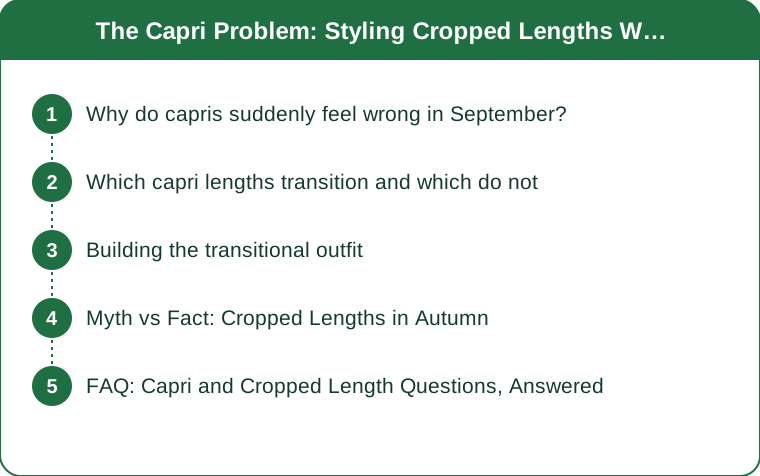
Why do capris suddenly feel wrong in September?
Because the ankle is a disproportionately significant thermal and visual boundary.
The thermal part: the ankle has relatively little insulating tissue and a good deal of surface area relative to volume. Blood vessels run close to the surface, which is why cold ankles register so quickly and why covering them changes perceived warmth far more than the area suggests.
The visual part matters just as much. A cropped hem ending at bare skin above a low-cut trainer creates a gap that reads as summer. In an autumn context - a knit jumper, a jacket, boots elsewhere on the street - that gap reads as an outfit that has not caught up with the season.
What this means practically: you can extend capris well into autumn by closing the gap, and the fix is at the foot rather than the leg.
The three closures that work:
- A crew sock plus a substantial trainer - the most current-looking option, and the visual weight of the shoe balances the cropped hem
- A low ankle boot where the shaft meets or overlaps the hem
- A longer sock deliberately shown between hem and shoe, which reads as intentional styling rather than a gap
What does not work: a no-show sock with a low-profile trainer, which is exactly the summer combination and exactly what makes the outfit look stranded.
Which capri lengths transition and which do not
Not all cropped lengths behave the same way, and the difference is where the hem sits relative to the calf.
Mid-calf, the classic capri: the hardest to transition. Ending at the widest part of the calf cuts the leg at its broadest point, and there is a lot of exposed skin below it. Best paired with a boot that comes up to meet it, or retired first.
7/8 length, ending just above the ankle bone: the easiest and the most versatile. It reads as a full-length trouser that happens to show the ankle, and works with almost any shoe. This is the length worth owning if you only own one.
Below-knee or long capri: awkward in most contexts and hard to style in autumn. The proportion works best with a very long top or a dress worn over.
A practical rule for hem placement: the narrowest point of the lower leg, just above the ankle bone, is the most flattering place to end a cropped trouser. Hems ending at the widest point of the calf are the least forgiving, which is why 7/8 has largely replaced true capri in activewear.
For the current weeks specifically:
- Keep 7/8 lengths in rotation through October in most climates
- Move true mid-calf capris to the back or reserve them for indoor sessions
- Pair with a longer top layer - an oversized knit or a longline cardigan visually rebalances a cropped bottom and adds warmth where it counts

Building the transitional outfit
The structure that works is heavier on top, lighter on the bottom, with the ankle closed.
The formula:
- Substantial top layer - chunky knit, longline cardigan, quilted jacket
- Fitted cropped bottom
- Closed ankle - crew sock and trainer, or a low boot
- One warm-toned accessory to signal the season
Why weighting the top works: a cropped hem looks summery on its own and looks deliberate under a heavier layer. The contrast reads as a styling decision rather than a temperature miscalculation.
Sock choices, which now matter:
- A ribbed crew sock in cream, oatmeal or grey is the current default and reads well
- Matching the sock to the trainer elongates the leg
- Matching the sock to the legging creates a continuous line and is the most flattering with mid-calf lengths
- A contrasting sock shortens the leg visually - fine if that is the intention
Layering for a 12-degree morning and a 22-degree afternoon:
- A light long-sleeve base under the knit, removable
- A jacket you are happy to carry, which is the real constraint
- Nothing you cannot take off - the failure mode of transitional dressing is a single warm garment with no middle setting
For workouts specifically: cropped lengths are genuinely good for autumn training, because you warm up quickly and the calf ventilation is useful. The problem is only the walk there and back, which a pair of joggers over the top solves completely.
Myth vs Fact: Cropped Lengths in Autumn
Myth: Capris are a summer-only item. Fact: 7/8 lengths transition perfectly well with the right footwear and top layer. The thing that dates the outfit is the bare ankle above a low trainer, not the trouser length itself.
Myth: Showing socks with cropped trousers looks wrong. Fact: a deliberately visible crew sock is currently one of the more reliable styling moves. The rule against visible socks applied to a different silhouette era - with cropped hems and chunky trainers it reads as intentional.
Myth: You need full-length leggings once it drops below 15 degrees. Fact: for anything active, cropped is often more comfortable because you warm up fast. The cold you feel is at the ankle and in the first five minutes, both of which are solvable without changing the trousers.
Myth: Mid-calf is the most flattering cropped length. Fact: it cuts the leg at its widest point, which is the least flattering place to end a hem. Just above the ankle bone, at the narrowest point, is more universally flattering, which is why 7/8 dominates.
Myth: Dark colours are the only autumn-appropriate option. Fact: the seasonal signal comes from texture and layering far more than from colour. A cream cropped legging under a chunky oatmeal knit reads autumnal; a black one under a summer tee does not.
FAQ: Capri and Cropped Length Questions, Answered
How late in the year can I wear capris?
With a crew sock, a substantial trainer or low boot, and a heavier top layer, 7/8 lengths work comfortably into late October in most temperate climates.
What shoes work best with cropped leggings in autumn?
A chunky trainer with a visible crew sock, or a low ankle boot whose shaft meets the hem. Low-profile trainers with no-show socks are the combination that reads stranded in summer.
Should my socks match my leggings or my shoes?
Matching the leggings creates the longest continuous line; matching the shoes is the safer default. Contrasting socks visually shorten the leg.
Is 7/8 the same as capri?
No. Capri traditionally ends mid-calf; 7/8 ends just above the ankle bone. The 7/8 length is considerably easier to style year-round.
What top length works with cropped bottoms?
Longer and heavier than you would wear in summer. An oversized knit or longline cardigan rebalances the proportion and makes the cropped hem read as deliberate.
TL;DR:
- The ankle, not the calf, is what makes capris feel and look wrong in cool weather
- A crew sock with a substantial trainer, or a low boot, extends the season by weeks
- 7/8 lengths transition easily; true mid-calf is the hardest to style in autumn
- Weight the top layer heavily so the cropped hem reads as a choice
- Texture and layering signal the season more effectively than colour does
Do not put the cropped leggings away yet. Put a crew sock on and a heavier knit over the top, and they have another six weeks in them.
See It in Motion
Seen here: Super High Waist Embossed Yoga Leggings with Inner Pocket — shop it on bubblelime.com
Keep Reading
This article is for general informational and styling purposes only. Fit, sizing, and product availability may vary.