Why Capri Leggings Ride Up Behind the Knee — and How to Stop It
Quick Answer: Capris ride up when the hem sits too close to the back of the knee, where the skin folds and stretches through every step. Each bend nudges the fabric upward and it never travels back down. The fixes, in order of effectiveness: choose a length that lands at least two inches below the knee crease or clearly above it, look for a wide flat hem band or silicone gripper, size correctly at the waist rather than the leg, and prefer higher-recovery fabric that does not bag once stretched.
You start the walk with the hem at mid-calf and finish it somewhere near your knee.
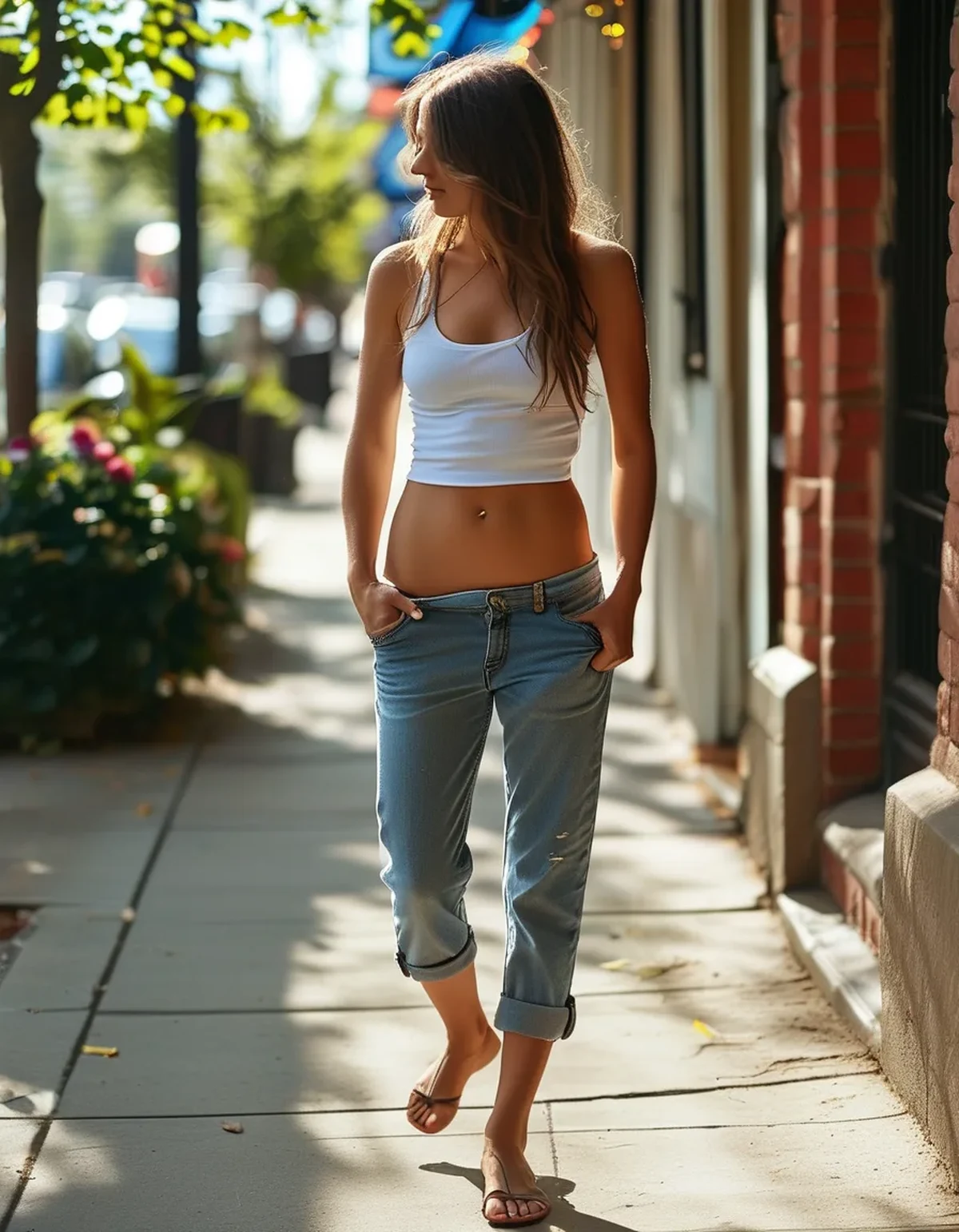
Why is the back of the knee such a problem zone?
Because it is the one place on your leg where the skin changes dimension dramatically with every movement.
When you straighten your leg, the back of the knee lengthens. When you bend it, the skin bunches into a fold. Fabric sitting right at that crease gets compressed and released hundreds of times per walk, and each cycle pushes it very slightly upward.
Fabric does not slide back down on its own. There is no downward force acting on it — gravity is pulling on the whole garment, but friction against your skin holds the hem exactly where the last step left it. The migration is one-directional and cumulative.
The knee is also where your leg circumference changes fastest. Just above the knee is the bottom of your thigh, which is considerably wider than the calf below it. A hem that migrates upward moves onto a wider part of the leg, gets stretched tighter, and grips harder — which is why a rising hem tends to stay risen and start to feel constrictive.
This is not a defect in the leggings. It is a geometry problem you can style around.
What capri length actually stays put?
Two safe zones, and one to avoid.
Safe zone one: mid-calf, at least two inches below the knee crease. The calf is a stable, relatively cylindrical surface and the hem is far enough from the joint that bending does not disturb it. This is the classic capri position and the most reliable.
Safe zone two: clearly above the knee, in short-legging territory. Here the hem sits on the lower thigh, which barely changes shape when you bend, and the thigh’s taper works with you rather than against you.
The problem zone: within about an inch either side of the knee crease. This is where most riding-up complaints originate, and it is unfortunately a common length because it looks proportional standing still in a mirror.
Height is the complicating factor. A pair marketed as capri sits mid-calf on someone 5’7” and lands right at the knee on someone 5’2”. The label tells you the designer’s intent, not where it lands on you. Try the pair on and bend the knee fully — that single movement predicts the whole day.
If a pair you already own sits in the problem zone, the practical fix is to wear it as a shorter length by pulling it deliberately above the knee rather than fighting it downward.
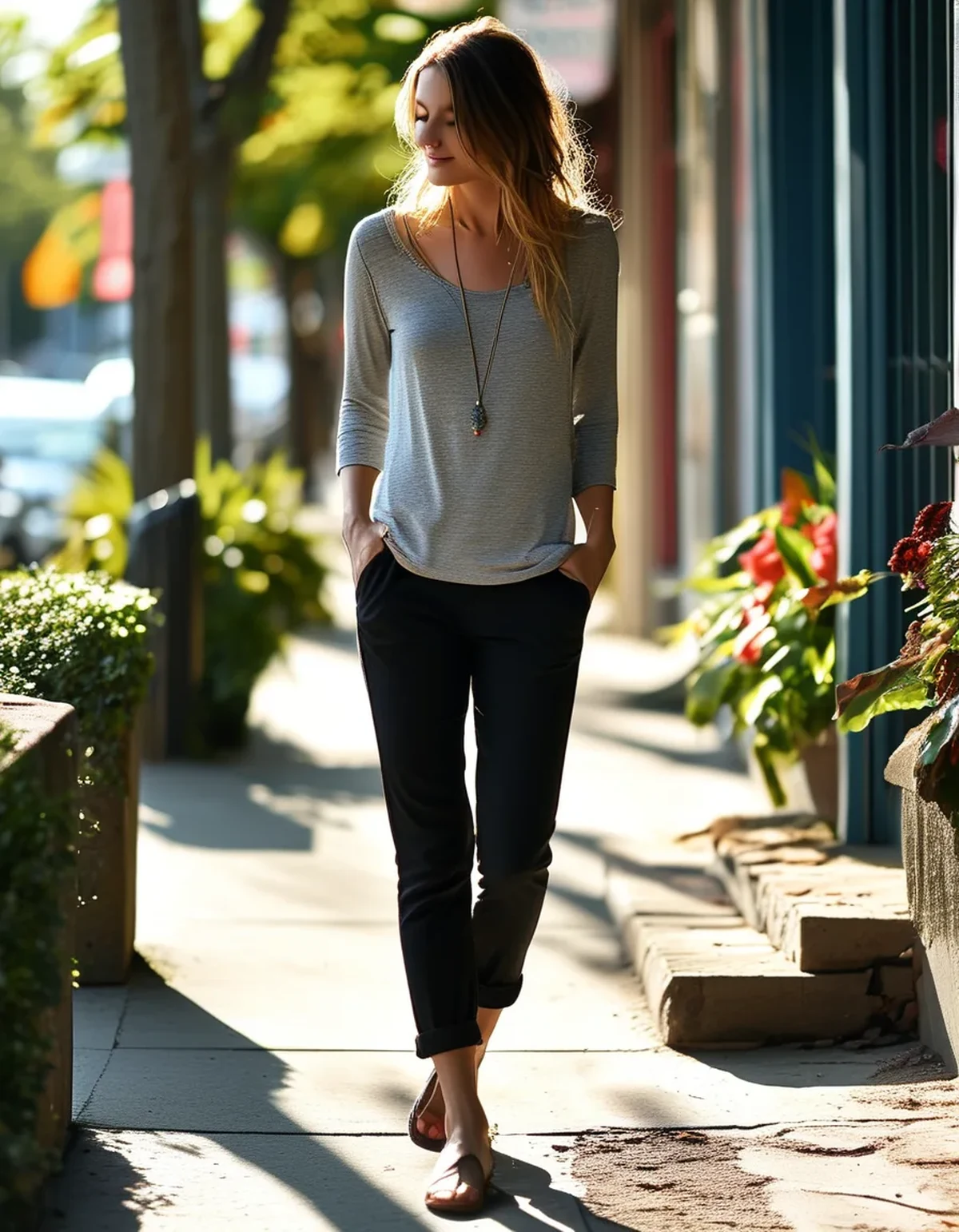
Which construction details keep a hem in place?
A wide flat hem band. Two inches or more of doubled fabric distributes grip over a larger area and resists rolling. A narrow rolled hem has almost no grip and rolls the moment it is stretched.
Silicone grippers. Thin bands of silicone printed inside the hem. Common in cycling shorts and increasingly in capris. They work well; the tradeoff is a mild pressure line on the skin and gradual peeling after many washes.
High recovery fabric. Test it: stretch the hem area and release. If it returns cleanly, it will keep gripping. If it stays slack, the hem widens through the day and slides.
A high, secure rise. This is the one people miss. If the waistband is sliding down, the whole garment shifts and the hem appears to rise. Check the waist before you blame the hem — a rising hem with a falling waist is one problem, not two.
Seam placement. A pair with a defined calf seam holds its shape better than a fully seamless tube, because the seam gives the fabric a structural anchor.
What does not help: sizing down. A tighter pair grips harder at the hem but also generates more upward force at every bend, and it usually migrates faster, not slower.
5 Mistakes That Make Riding Up Worse
1. Sizing down to fix it. Tighter fabric means more tension pulling upward through each bend. It also raises the odds of the hem cutting into the calf once it moves.
2. Applying lotion right before wearing. It reduces friction exactly where you need friction, and it degrades silicone grippers over time. Let it absorb fully first.
3. Using fabric softener. It coats fibers, reduces grip, and dulls elastane recovery. It is the single most common cause of a previously reliable pair suddenly migrating.
4. Blaming the capri when the waistband is the culprit. Do the check standing in front of a mirror: mark where the waistband sits, walk for two minutes, and look again. If the waist dropped, fix that first.
5. Wearing them for the wrong activity. Cycling, stair climbing, and hiking involve deep repeated knee flexion — the exact motion that drives migration. Those are full-length or short days, not capri days.
FAQ: Capri Fit Questions, Answered
Do capris ride up more on some body types?
They migrate more when there is a larger difference between calf and lower-thigh circumference, since the hem climbs onto a wider surface faster. It is a proportion issue, not a size issue — plenty of people at the same size have different calf tapers.
Is a folded-up cuff a real fix?
It helps briefly by adding weight and thickness at the hem, but folded fabric unfolds through movement and the cuff itself creates bulk at the calf. Better as a styling choice than a solution.
Are capris still in season in August?
Yes — late summer into early fall is arguably their best window, when full-length feels warm and shorts feel too casual for errands. They also layer well over the temperature swing between a 60-degree morning and a 80-degree afternoon.
Will hemming a full-length pair into capris work?
Only with a coverstitch or twin-needle finish on stretch fabric, and you lose the original hem band. Expect less grip than a purpose-made capri, and choose the mid-calf landing point rather than the knee.
TL;DR:
- Hems ride up because fabric sitting at the back of the knee gets pushed upward by every bend and never returns.
- Choose a length at least two inches below the knee crease or clearly above the knee — avoid the crease zone entirely.
- Look for a wide flat hem band, silicone grippers, and high-recovery fabric.
- Check whether the waistband is sliding first; a falling waist looks like a rising hem.
- Skip fabric softener and lotion right before wearing — both kill grip.
Capris are one of the best late-summer lengths when the hem sits somewhere stable. Get the landing point right and the constant tugging stops being part of the outfit.
See It in Motion
Seen here: Super High Waist Embossed Yoga Leggings with Inner Pocket — shop it on bubblelime.com
Keep Reading
This article is for general informational and styling purposes only. Fit, sizing, and product availability may vary.